
 Tshirt
 Custom Hoodie & Sweat
 Custom Bags
 Flag
Flag
 Towel
Towel
 Custom Scarf
 Cap
Cap

Sublimation Printing Process: A Tournament-Grade Solution for Sweat-Resistant and Fade-Proof Custom World Cup T-Shirts
In the high-intensity scenarios of World Cup events, sweat resistance and fade resistance of custom T-shirts are core demands of B2B buyers (event organizers, sports institutions).
January 23, 2026
Views:
680
|
wendy
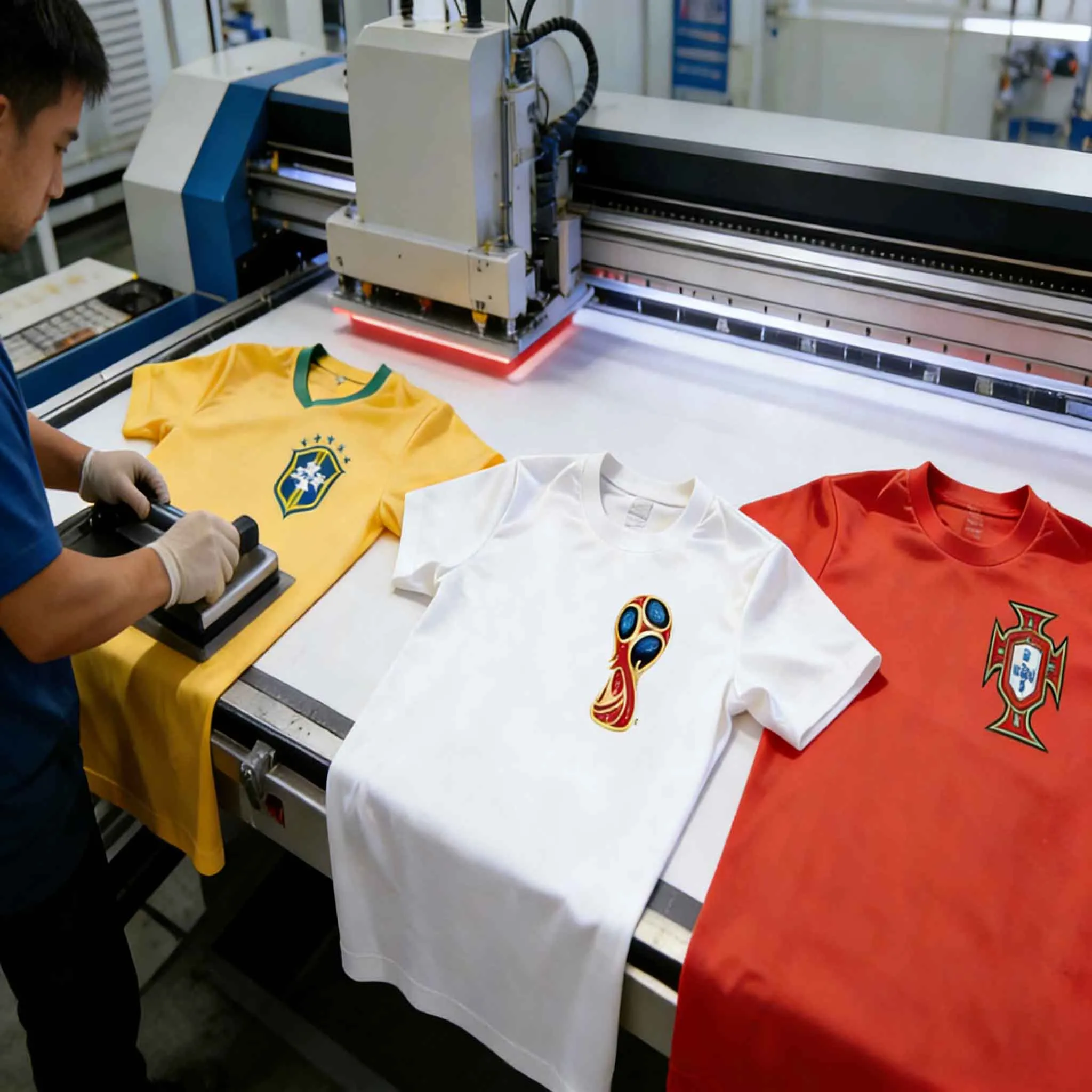
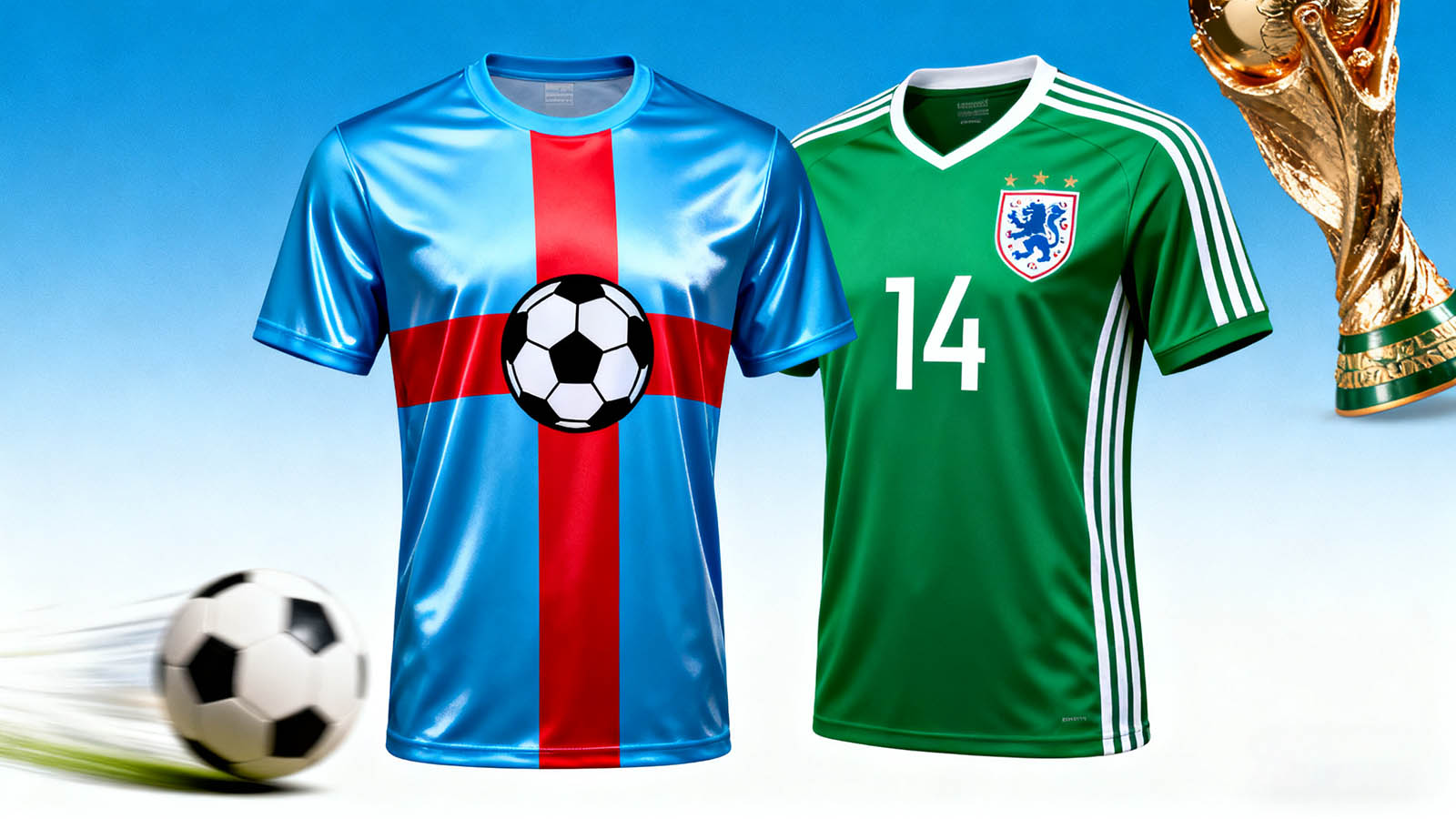
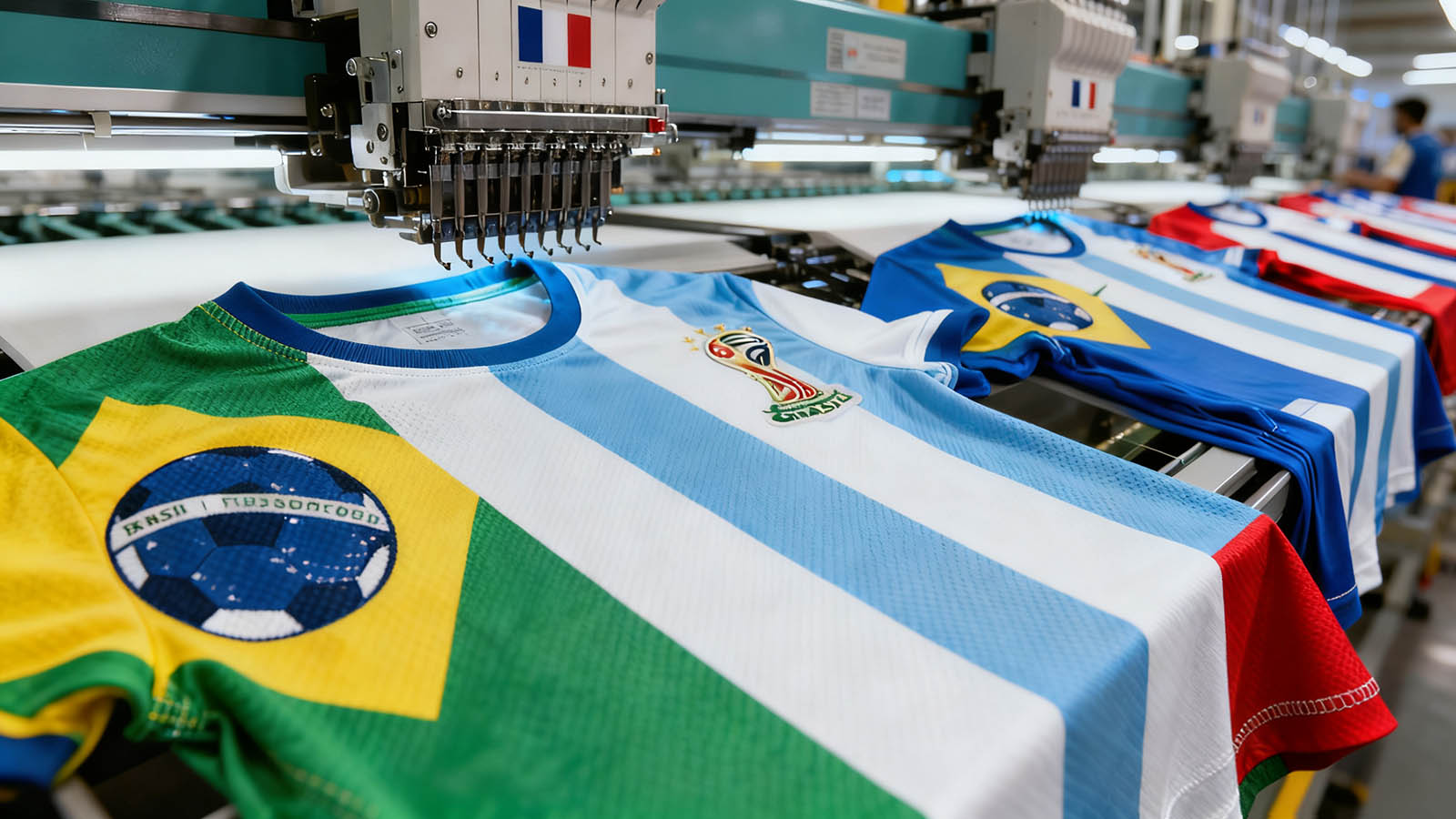
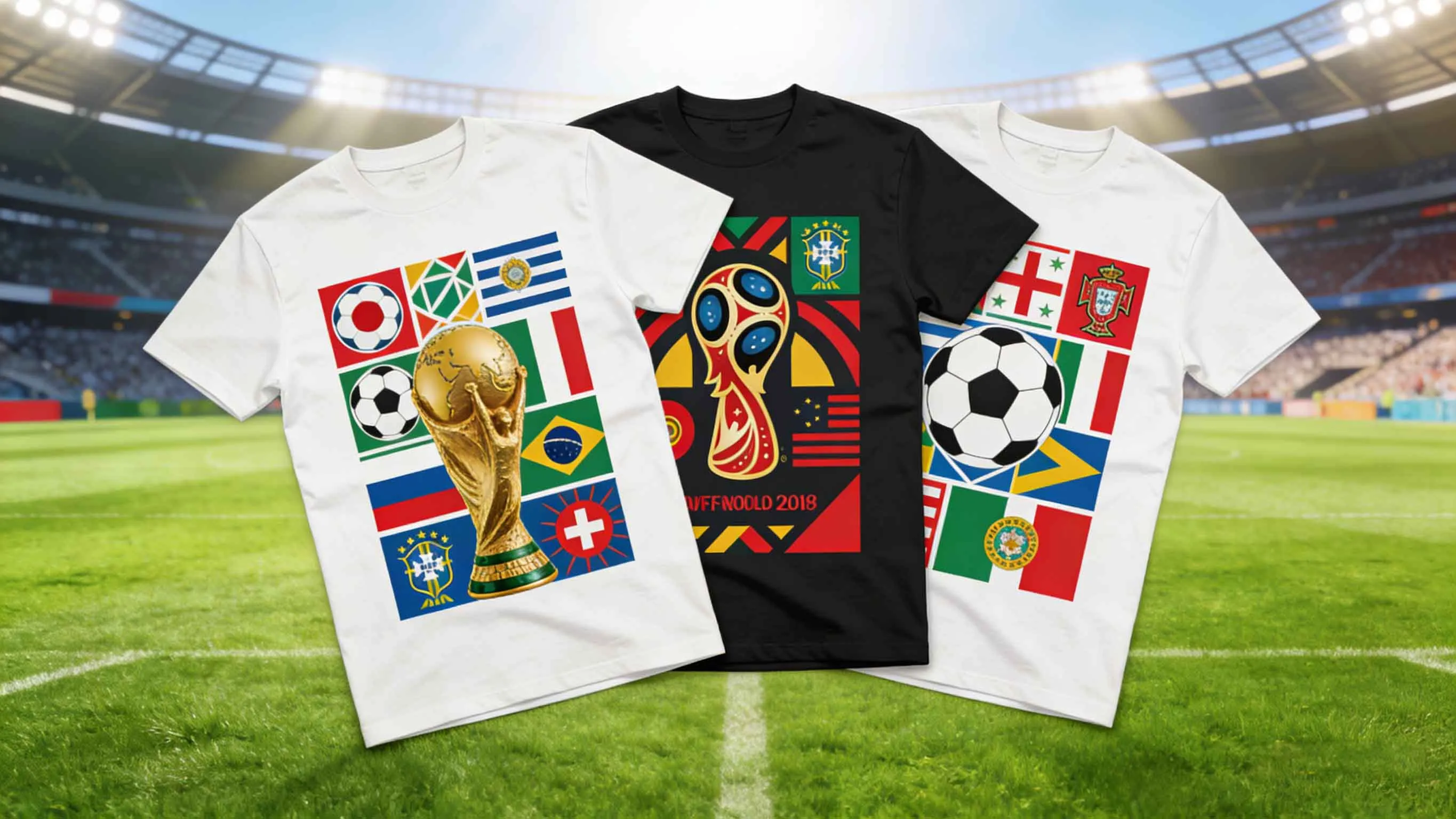
Sublimation Printing Process: The "Durable" Core of Custom World Cup T-Shirts, Redefining Tournament Apparel Standards
In the high-intensity scenarios of World Cup events, sweat resistance and fade resistance of custom T-shirts are core demands of B2B buyers (event organizers, sports institutions). Athletes' heavy sweating during long hours of exercise, repeated wearing and washing, as well as outdoor exposure, all impose strict requirements on the process stability of apparel. As the core technology for tournament-level customization, sublimation printing process completely solves the pain points of traditional printing (screen printing, transfer printing) such as easy peeling, fading, and poor breathability, and has become the core competitiveness of Gahumi in serving global marathon events.
What is Sublimation Printing Process?
Sublimation printing is a process that realizes image or text printing using thermal transfer technology. Its core principle is to directly sublimate solid sublimation ink into a gaseous state through high temperature, which penetrates and adheres to the molecular gaps of special substrates such as polyester, and integrates with the substrate after cooling.
This process does not require media such as glue. The printed patterns are bright in color and delicate in layers, with characteristics of scratch resistance, wash resistance, and no fading. It can also achieve high-definition printing effects without glue edges. It is commonly used in scenarios such as sportswear printing, custom mugs, digital printed fabrics, and ID card production. It is especially suitable for small-batch and personalized customization needs, and is widely used in industries such as advertising gifts and textile apparel.
The core advantage of sublimation printing process lies in "dye penetration integration". Different from the principle of screen printing's "surface adhesion", it directly converts environmentally friendly dyes into a gaseous state through high temperature of about 200℃, which penetrates into the molecular gaps of fabrics such as polyester fibers, and integrates with the fabric after cooling.
This process characteristic enables custom World Cup T-shirts to achieve three major breakthroughs:
- Upgraded sweat resistance: Sweat will not cause pattern blurring or fading, because the dye has been deeply combined with the fabric fibers instead of staying on the surface;
- Strong wash resistance: After more than 50 standard washes, the pattern remains clear and bright, with a color fastness of grade 4 or higher (far exceeding the industry's grade 3 standard), fully meeting the athletes' needs for long-term preservation of T-shirts as commemorative apparel;
- Uncompromised breathability: No additional printing layers block the fabric's air holes. Combined with Gahumi's selected functional polyester fabrics, it achieves the dual guarantee of "breathable and sweat-absorbent, long-lasting color retention".
What are the Differences Between Sublimation Printing Process and Traditional Screen Printing Process?
The core differences between sublimation printing process and traditional screen printing process are reflected in multiple dimensions such as principle, applicable scenarios, effect and cost, which can be specifically divided into the following aspects:
-
Different core working principles Sublimation printing is medium-free penetration printing. High temperature directly sublimates solid ink into a gaseous state, which penetrates into the molecular gaps of polyester substrates and integrates with the substrate after cooling; while traditional screen printing is surface adhesion printing. Ink is directly scraped and printed on the substrate surface through the hollow areas of the screen, and the ink forms a film attached to the material surface.
-
Different applicable substrate ranges Sublimation printing has strong material limitations and is only suitable for materials with a high proportion of polyester components, such as polyester fabrics, coated ceramics, and metals; traditional screen printing has wider adaptability and can be applied to most common materials such as cotton, linen, paper, glass, and plastic.
-
Different pattern effects and durability Patterns printed by sublimation are delicate in color, natural in transition, without glue edges or a heavy feeling, wash-resistant, scratch-resistant, and not easy to fade after long-term use; patterns printed by traditional screen printing have clear lines and high color saturation, but multi-color overprinting is prone to alignment deviations, and the ink layer on the surface may wear and crack after long-term use.
-
Different mass production and cost structures Sublimation printing does not require plate making, so the cost of small-batch and personalized customization is low and the flexibility is high; traditional screen printing requires the production of exclusive screens, which has high plate-making costs, but in mass production, the unit cost will be significantly reduced, making it more suitable for standardized large-scale orders.
-
Different environmental performance Sublimation printing has no glue or waste ink residue throughout the process, causing little pollution to the environment; traditional screen printing uses ink thinning solvents, which are prone to producing pollutants and require supporting environmental protection treatment equipment.
As an OEM manufacturer with 31 years of experience in the fabric printing industry, Gahumi has carried out technical optimizations for the implementation of sublimation printing process: it uses environmentally friendly dyes certified by REACH and RoHS to eliminate harmful substance residues, meeting the safety standards of global events; it is equipped with intelligent constant-temperature printing equipment to ensure the consistency of pattern color and clarity of each T-shirt in mass production.
II. Gahumi's Production Strength: Scale and Efficiency Guarantee for the Implementation of Sublimation Printing Process
The tournament-level application of sublimation printing process is inseparable from strong production strength support—delivery efficiency, quality consistency, and cost controllability of bulk orders are the core pain points concerned by B2B buyers. With 3 production bases, 5,000㎡ workshop, and more than 200 high-speed and low-consumption equipment, Gahumi has built a dual barrier of "advanced technology and sufficient production capacity", enabling the sublimation printing process to efficiently adapt to the large-scale customization needs of marathon events.
Firstly, large-scale production capacity meets the needs of large orders. The customization volume of World Cup events often ranges from tens of thousands to millions of pieces. Gahumi's daily production capacity of 50,000 pieces and practical experience of "delivering million-level orders in 15 days" provide a guarantee for the bulk implementation of sublimation printing process. Secondly, the optimization of the entire supply chain reduces procurement costs.
Gahumi has established long-term cooperation with more than 1,000 high-quality fabric suppliers around the world, directly purchasing functional polyester fabrics suitable for sublimation printing process, skipping intermediate traders, and the procurement cost is lower than the industry average; at the same time, computer control systems are adopted in the production process to reduce human errors, and the consumption loss rate of sublimation printing process is reduced, further compressing costs. For B2B buyers, this means enjoying the high quality of sublimation printing process while achieving "cost controllability" and balancing "quality and cost-effectiveness". In addition, Gahumi supports a flexible minimum order quantity of 300 pieces, which also meets the customization needs of small and medium-sized marathon events. It can also achieve large-scale cost reduction through order integration, adapting to the procurement budgets of B2B customers of different scales.
Finally, continuous technological R&D upgrades the process competitiveness. Gahumi has always focused on the iteration of sublimation printing process. Combined with the scene needs of World Cup events, it has developed "UV-protective sublimation technology"—adding UV protection factors to dyes, so that custom T-shirts are not only sweat-resistant and fade-proof, but also can resist outdoor UV damage and protect athletes' skin; at the same time, it optimizes sublimation parameters for different fabrics (such as polyester fiber, spandex blend, recycled polyester fabric) to ensure process adaptability and meet customers' diverse fabric selection needs. This technological R&D capability keeps Gahumi's sublimation printing process in a leading position in the industry, providing B2B buyers with "exceeding expectations" customization solutions.
III. Full-Scene Adaptation: Differentiated Solutions for World Cup Sublimation Customization
There are differences in the participating groups, exercise intensity, and scene needs of World Cup events. Based on sublimation printing process, Gahumi provides differentiated customization solutions for B2B buyers, which not only guarantee the core advantages of the process, but also accurately match the needs of different events.
For customization needs focusing on "appearance and comfort", Gahumi adopts combinations such as "sublimation printing process combined with lightweight polyester fabrics". Pattern design supports high saturation and complex elements (such as event-themed illustrations, urban landmarks). Sublimation technology can accurately restore delicate patterns, making T-shirts both commemorative and suitable for daily wear; at the same time, the fabric weight can achieve the target weight according to customer requirements, which is light and breathable, reducing the wearing burden of short-distance sports.
For core needs of "functionality + durability", Gahumi's upgraded solution is "sublimation printing process combined with functional blended fabrics (polyester fiber + spandex)". The fabric has stronger elasticity and moisture absorption and sweat-wicking capabilities, which can adapt to the body stretching and heavy sweating scenes of long-distance sports; sublimation printing process focuses on ensuring "no blurring when sweating for a long time and no fading after repeated washing". At the same time, it optimizes the pattern position design—avoiding easy-to-friction areas such as armpits and waist to prevent pattern wear due to long-term friction. For full marathon events, "reflective strip sublimation printing" can be additionally added, and special dyes are used to achieve reflective effect at night, improving the safety of athletes' night running. Gahumi has adopted this solution for custom T-shirts of multiple marathon events. The reflective strip patterns and event logos are integrated through sublimation printing process, which does not affect the fabric's breathability and has been highly recognized by event organizers.
In addition, to meet the multilingual and multicultural integration needs of World Cup events, Gahumi's sublimation printing process supports high-precision text printing. Whether it is event slogans, multilingual logos, or complex brand logos, they can be accurately restored without blurring or jagged edges. At the same time, combined with Gahumi's one-on-one consultant service, B2B buyers can participate in the entire solution design process, from fabric selection, pattern adjustment to process optimization, and obtain "one-stop" customization support to ensure that the final product fully meets the event positioning and brand tone.
IV. Quality Closed Loop: Full-Process Control of Tournament-Grade Standards, Ensuring Worry-Free B2B Procurement
For B2B buyers, the "batch quality consistency" and "compliance" of custom World Cup T-shirts are crucial. Gahumi has established a full-process quality control system covering "raw materials - production - finished products - delivery", so that the advantages of sublimation printing process are truly transformed into stable product quality.
In the raw material link, Gahumi conducts three-level testing on fabrics suitable for sublimation printing process:
- Component testing: Ensure the polyester fiber content (the best adaptation ratio for sublimation printing process) and spandex content to guarantee fabric elasticity and printing effect;
- Breathability testing: Test the fabric air permeability through professional equipment to meet the sweat-wicking needs of marathon sports;
- Environmental protection testing: Ensure the fabric meets the Global Recycled Standard certification, and the dyes pass REACH and RoHS certifications to eliminate harmful substance residues, adapting to environmental policies in different regions of the world. Only after all raw materials pass the testing can they enter the production link, avoiding quality risks from the source.
In the production link, a "three-level sampling inspection" system is adopted to ensure batch consistency: the first sample needs to be confirmed by the customer, and mass production can only be started after confirming that the pattern color, size, and process effect are correct; during production, 10 pieces are sampled for inspection every 500 pieces produced, focusing on testing pattern clarity, color deviation, and size error; before the finished products leave the factory, a comprehensive inspection is carried out, including sweat resistance testing, friction resistance testing, and color fastness testing, to ensure that each product meets the tournament-level standards. In addition, Gahumi's production bases have passed multiple international certifications such as ISO, Amfori-BSCI, and Sedex, with standardized production processes, and can provide complete quality inspection reports to meet the compliance review needs of B2B buyers.
In the delivery link, Gahumi provides flexible logistics solutions, supporting batch delivery and global distribution. According to the preparation cycle of World Cup events, it promises fast delivery within 7-14 days (urgent delivery can be negotiated for large orders) to ensure that the products arrive on time. At the same time, an after-sales guarantee system is established. If there are batch quality problems (such as pattern fading, excessive size deviation), Gahumi can start the replenishment process within 72 hours. Relying on strong production capacity, it avoids affecting event preparation. Gahumi responds quickly and completes the supplementary production and delivery within 5 days, fully reflecting the flexibility and reliability of B2B services.
FAQ
Q1: What is the minimum order quantity for Gahumi's sublimation-printed custom World Cup T-shirts?
A: The minimum order quantity is 300 pieces, which meets the bulk needs of B2B procurement. For large orders (more than 100,000 pieces), more favorable procurement prices and expedited delivery services can be enjoyed.
Q2: Can sublimation-printed custom T-shirts be adapted to different fabrics?
A: It is mainly suitable for fabrics with a polyester fiber content of ≥90% (including pure polyester fiber, polyester fiber + spandex blend, and recycled polyester fabric). Such fabrics can maximize the sweat-resistant and fade-proof advantages of sublimation printing process; Gahumi can provide fabric sample testing to ensure the adaptability between the process and the fabric.
Q3: What is the delivery cycle for bulk customization?
A: The delivery cycle for regular bulk orders (300-100,000 pieces) is 5-20 days; for large orders of more than 100,000 pieces, expedited delivery can be negotiated, and million-level orders can be delivered in as fast as 10-15 days (such as the cases of Venezuela and Angola events).
Q4: How to ensure the consistency of pattern colors for bulk customization?
A: Gahumi adopts high-precision digital pattern scanning and constant-temperature sublimation equipment, combined with standardized production processes, to control the color deviation of bulk products within ±0.5%; samples are provided for confirmation before production to ensure that the colors meet customer requirements.
Q5: Is there a test report for the sweat-resistant and fade-proof performance of sublimation-printed custom T-shirts?
A: Yes. All products can provide third-party test reports, including data such as color fastness (≥grade 4), sweat resistance test (no fading for 24 hours), and wash resistance test (no peeling after 50 washes), which meet international tournament-level standards.
Q6: Can Gahumi customize sublimation T-shirts with reflective function for World Cup events?
A: Yes. Gahumi supports "reflective strip sublimation printing". By adding reflective dyes, the pattern can achieve a reflective effect at night or in low-light environments without affecting the fabric's breathability and process durability.
Q7: Can Gahumi provide one-stop OEM/ODM services?
A: Yes. From solution design, fabric selection, pattern optimization to production, quality inspection, and logistics and distribution, Gahumi provides a full-process one-stop OEM/ODM service. It responds to customer needs quickly within 1 hour, and a professional team follows up the whole process.
Q8: Do sublimation-printed custom T-shirts meet environmental standards?
A: Yes. The dyes have passed REACH and RoHS certifications, and the fabrics meet the Global Recycled Standard certification, with no harmful substance residues, which can meet the environmental policies and event compliance requirements in different regions of the world.

share
Contact Us
Your email address will not be published. Required fields are marked*
Related Products
.webp)
.jpg)
.jpg)
.jpg)
.jpg)
.jpg)

.jpg)